


Capital Ideas podcast guest reflects on pioneering veteran-focused Reg A+ lending, why the SEC’s investor-protection instincts outran Congress’s intent, and how his new venture, Century House, is trying to give financial advisors a bigger role in their clients’ lives.
Mark Rockefeller has spent the better part of the last decade at the center of two very different experiments: proving that Regulation A+ could fund veteran-owned businesses at scale, and, more recently, trying to formalize what he calls “family governance” for ordinary households. He discussed both on the latest episode of Capital Ideas, the podcast produced by the Investor Choice Advocates Network (ICAN), in conversation with co-hosts Nick Morgan, Mark Hiraide, and Dara Albright.
Rockefeller co-founded StreetShares in 2014, building the company around what he calls “affinity-based lending” – pooling capital from veterans and veteran supporters to fund loans to veteran-owned small businesses. The bet, he said, was that social loyalty between veteran lenders and veteran borrowers would improve repayment odds, and that a reverse-auction structure would push interest rates down for borrowers.
StreetShares was among the first fintech innovators to offer Regulation A+ debt offerings once the JOBS Act rules finally took effect in June 2015 – roughly three years after the law passed and after what Rockefeller described as years of back-and-forth with SEC staff to land on a structure and filing the agency would accept.
A Regulatory Regime That “Smothered the Innovation”
Rockefeller was direct about where he thinks regulators went wrong, even as he credited the Securities and Exchange Commission (SEC) with ultimately working with the company.
In his view, the JOBS Act’s legislative intent was unambiguous: open private capital markets to a broader class of investors. Regulators, he argued, layered a heavy investor-protection posture on top of that mandate in a way that went beyond what Congress asked for.
“Every single person who ever bought one of our veteran business bonds has been satisfied. Nobody lost money,” he said, stating that it was the compliance burden that eventually pushed StreetShares to abandon the Reg A+ debt model in favor of a conventional credit facility. “Nothing innovative should be shut down because of compliance burden,” he added.
Rockefeller framed the issue as a tension between two legitimate policy goals: protecting investors and expanding access to capital.
In his view, the problem was not the SEC’s concern for investor protection itself, but the weight regulators ultimately gave it relative to Congress’s goal of opening private-market opportunities to a broader class of investors. He noted that regulators became somewhat more flexible toward the end of StreetShares’ run through sandbox-style programs and said he has real respect for reform-minded people inside the SEC. Still, he argued that once an agency acquires regulatory authority, it rarely gives it back voluntarily without a strong congressional push comparable to the JOBS Act.
Asked why veterans in particular have been disproportionately successful founders – pointing to Silicon Valley figures like Steve Blank, Pitch Johnson, and Bill Draper – Rockefeller pointed to a mix of factors: a bias toward execution (“veterans know how to get things done”), a different relationship to risk after facing physical danger overseas, and a strong sense of gratitude and purpose that channels into building something new.
From StreetShares to Century House
Following StreetShares’ acquisition in 2022, Rockefeller recently launched Century House, which he describes as an “intergenerational family operating system” built around what he calls “soft governance.”
The platform is designed to help families articulate mission statements, values, and decision-making processes that complement, rather than replace, the work of estate attorneys, financial advisors, and tax professionals.
The idea traces back to a personal project. Roughly eight years ago, Rockefeller developed a 100-year strategy for his own family, including a mission statement, vision statement, and set of core values that he and his wife use to guide major decisions. He also credits an unusual family archive – The Transactions of the Rockefeller Family Association, a series of books documenting structured family meetings from 1905 to 1925 – as a direct influence on Century House. Rockefeller said he digitized the archive and used AI tools to identify recurring practices the family had used to preserve connection across generations.
Rockefeller coined the term “family entropy” to describe what he sees as the default trajectory of families absent deliberate effort: relationships and shared identity naturally erode over time — through geography, unresolved disputes, or simply the passage of generations — unless “energy is applied to the system.”
Century House, built around five pillars the company calls Creed, Council, Capital, Chronicle, and Continuity, offers 27 tools intended to counteract that drift, including a family-history discovery tool, an oral-history capture tool for older relatives, and a legacy-letter tool — a practice Rockefeller said is common among military service members before deployment but rare elsewhere.
Advisors, AI, and the Fight to Retain the Next Generation
A recurring theme of the conversation was how automation is reshaping the financial advisory business. Albright noted that as AI tools make basic portfolio construction increasingly commoditized, advisors may need to evolve into something closer to a trusted, broader counselor rather than a pure portfolio manager.
Rockefeller said that shift is already reflected in Century House’s customer base. Most buyers, he said, are financial advisors who give the platform to clients as a gift, in part to address a longstanding industry challenge: second-generation heirs often leave their parents’ advisor after a wealth transfer. By bringing advisors into conversations about family mission, values, and long-term purpose – without giving them any custodial or data-management role – Century House creates a structured way for advisors to build relationships with the next generation before an inheritance event forces the issue.
On regulation, Rockefeller doesn’t expect much to change. He said Century House deliberately stays out of any activity requiring a securities or investment-advisory license, positioning itself as a complement to – not a substitute for – regulated professionals. Without a legislative moment on the scale of the JOBS Act, he said, he doesn’t see the compliance burden on advisors easing, and argued that burden already discourages advisors from customizing their offerings, pushing the industry toward homogeneity.
Century House launched its free diagnostic tool this year at CenturyHouseMethod.com. Rockefeller said his personal goal is to get a million families to adopt a structured, long-term family strategy.
“If a million families write a 100-year strategy, I think parenting gets better, and decision-making gets better,” he said.
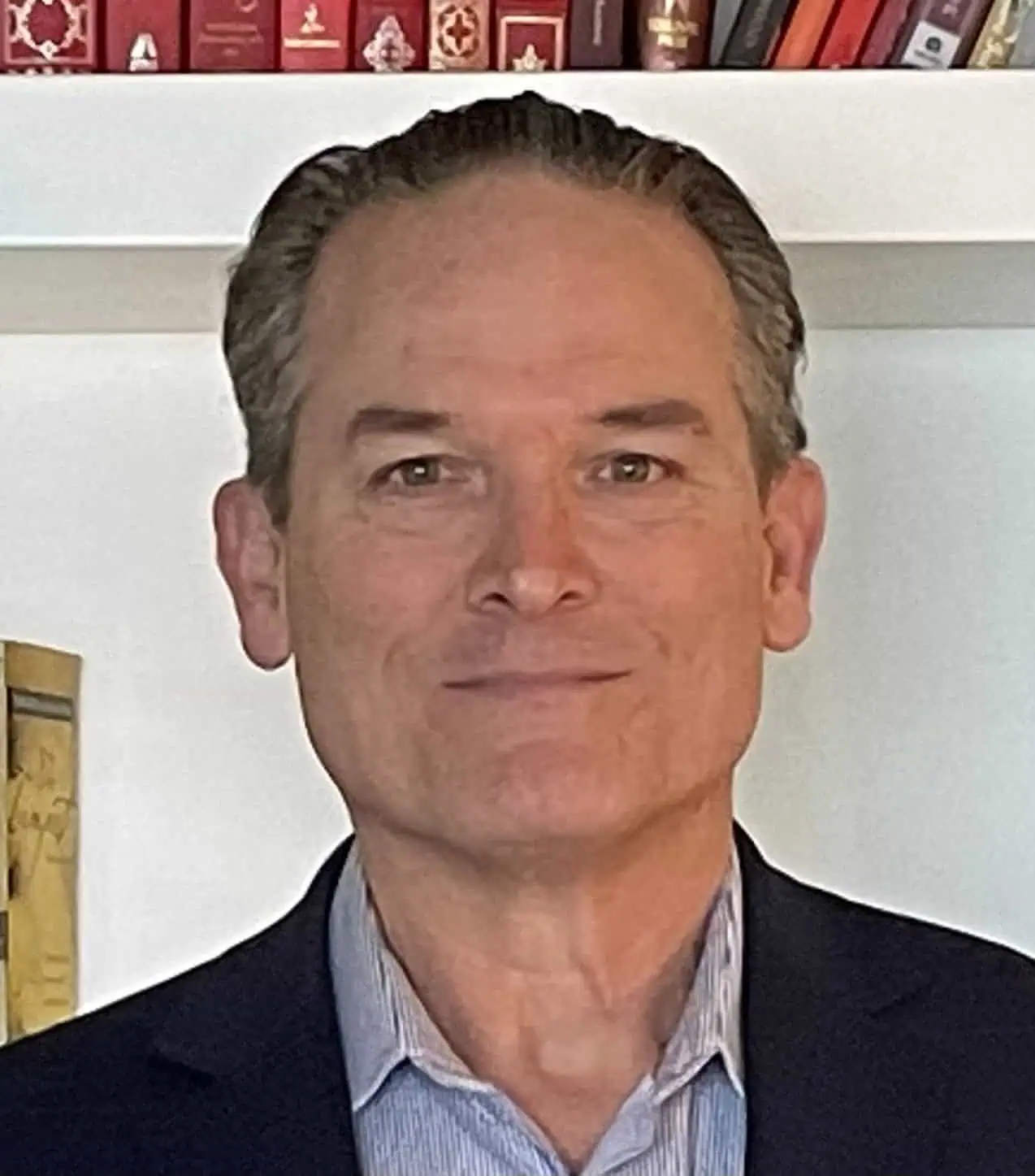
Nick Morgan is President and Founder of ICAN, the Investor Choice Advocates Network, a nonprofit public interest litigation organization dedicated to serving as a legal advocate and voice for everyday investors and entrepreneurs. He was previously a partner in the Investigations and White Collar Defense Group at Paul Hastings law firm. Morgan previously served as Senior Trial Counsel in the SEC’s Division of Enforcement. Capital Ideas is a series created by Morgan and Dara Albright.