

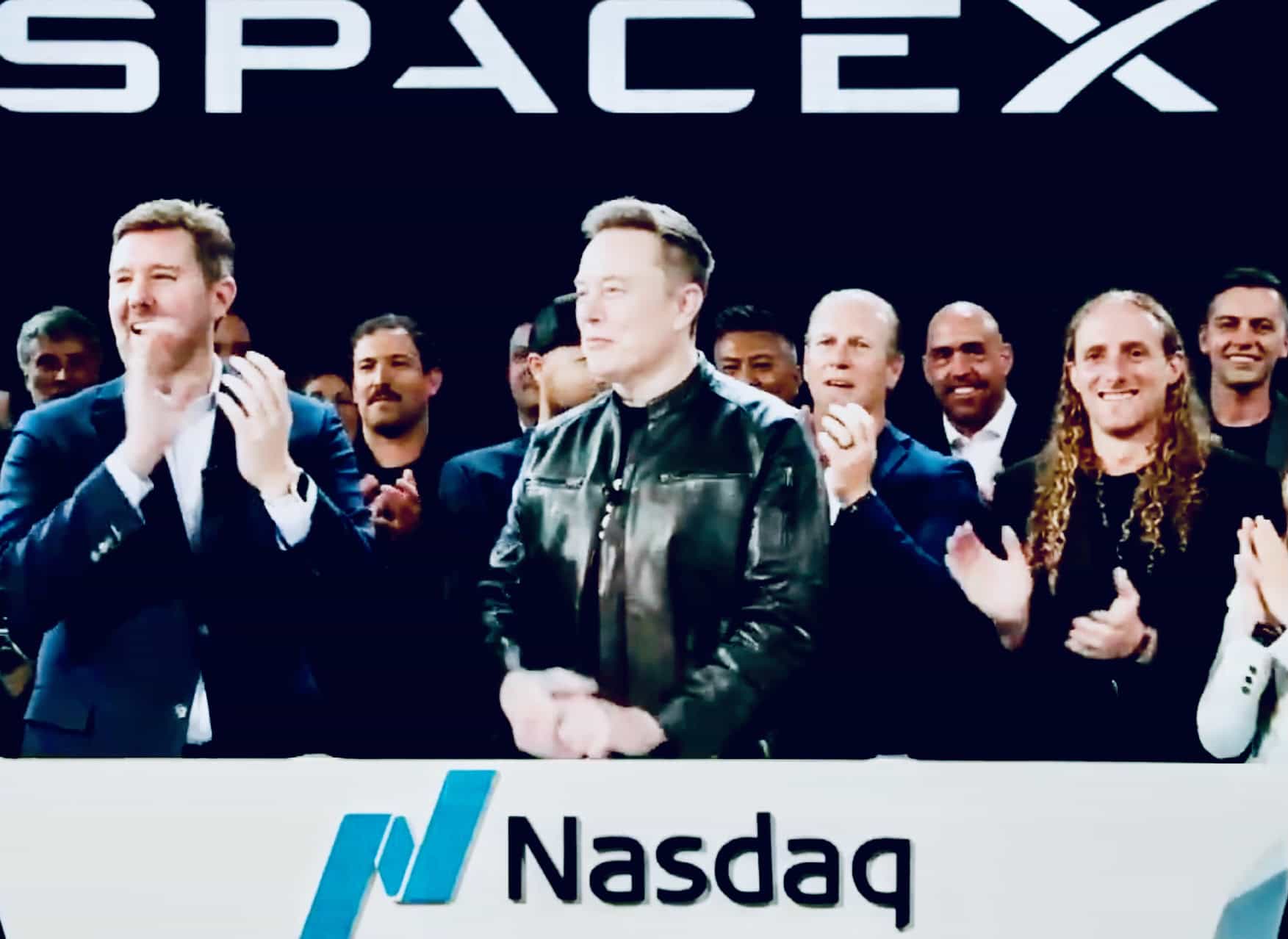
SpaceX (NASDAQ:SPCX) goes public today in an initial public offering that values the firm at $1.8 trillion. The fixed-price offering at $135 a share is off the charts on the hypeometer, with every pundit in capital markets sharing opinions on the valuation, the total addressable market, and how shares will trade today and in the coming weeks and months.
All of this is further bolstered by the fact that Elon Musk, probably the greatest entrepreneur of our time, is the founder and CEO of the company that has transformed space exploration and global internet access through his Starlink service.
Not everyone believes an investment in the IPO makes sense. Perhaps most notably, Morningstar believes SpaceX’s valuation is more than double what it should be. Others look to the future and to the firm’s ability to monetize its services in the coming years.
In the end, the SpaceX IPO is emblematic of the success of US capital markets, with a leading firm created and grown, generating enormous wealth for investors, with many billionaires, hundreds of investors joining the centaurian category, and thousands of millionaires emerging, and perhaps one trillionaire.
Below is a series of comments CI has received from Fintech observers addressing the historic offering.
Mark Klein, CEO and President, SuRo Capital, says the IPO parade is becoming a stampede as SpaceX is going to be a bellwether for the broader market:
“From our perspective, we’re excited. So, speaking our own book, we’ve been very excited about where we are in the public-market cycle,” said Klein. “It’s not a surprise that SpaceX is pricing this week, Anthropic has filed, and OpenAI has filed.”
Klein reflected on the growth of AI and the need to acquire capital
“You’re talking about hundreds of billions of dollars going to a handful of companies—multiple times the amount of IPO dollars raised in either 2024 or 2025.”
Klein says many companies are planning to go public, but some may wait and see what happens, since so much money is going to just a few companies.
“I don’t think that takes smaller IPOs off the docket, but some of the more exciting larger offerings may end up happening in 2027 instead of the second half of 2026. If Alphabet and Meta are raising tens of billions of dollars, that may absorb capital that otherwise would have gone to some of these AI-native companies as they come public.”
The CEO of space investment firm Seraphim Space, Mark Boggett, believes the IPO is a landmark moment for the space economy and will further integrate space into the mainstream investment sector. He predicts the listing will increase interest from a wider range of investors, including VC firms.
“A SpaceX IPO has the potential to bring additional capital into the asset class, increasing participation from institutional investors, wealth managers, retail investors, and public market participants. We are already seeing evidence of this trend through the emergence of dedicated SpaceTech ETFs and increasing investor engagement with specialist space-focused investment vehicles,” Bogget states.
He adds that the space economy is increasingly important for defense, security, communications, navigation, energy, and more. The IPO will shine a spotlight on the broader investment opportunity in space.
Nancy Tengler, CEO/CIO of Laffer Tengler Investments, says that many people are comparing SpaceX to the Facebook [Meta] flop when it listed on the Nasdaq, which struggled to enable trading.
“The stock price went from about $38 down to $18 and closed out the year well below the offering price. I understand the concern that this is a loftily priced IPO and that the fundamentals may not fully support the valuation. But this is not a name you’re buying based on fundamentals. For me, the analogy is Amazon. This was a company that changed the way we live. If you go back and look at Amazon since its IPO, the stock is up more than 243,000%. The question becomes: what’s your time horizon, and do you believe in the technology?”
Tengler says their time horizon is from three to ten years, so the shares open at $135 and drop to $1oo – that is no big deal.
“Of course, if it opens at $250, that would give us pause. But I don’t know that we’re going to see that.”
Tengler highlights that SpaceX is the only vertically integrated AI company, as it has data, LLMs, hardware, manufacturing, and more.
“From our perspective, it is definitely an AI company, but we’re focused on the benefits, scale, and cost reductions that could come from building data centers in space and from making Starship fully reusable. They’re not there yet—they’re saying the second half of 2026—but that would be a game changer in our view. And then they’ve got the profit generator in Starlink. The TAM on that business is pretty compelling, and I think they’re only scratching the surface.”
She says that many of Elon’s shareholders have become millionaires, and it is amazing to see the economic ecosystem that has formed around Tesla’s shareholders.
“Personally, I’d love to be on that list of retail shareholders getting IPO shares,” adds Tengler. “Long term, the possibility that he could merge Tesla into SpaceX becomes even more interesting and compelling.”
Tengler says Musk has a lot of “haters” – something she struggles to understand. Because of this, we frequently hear more about the bear case than the bull scenarios.
“But this is a narrative stock. You’re buying it for the vision and the excitement. That’s why people bought Amazon and then it went up hundreds of thousands of percent.”
As for the broader impact on the markets, she anticipates no lasting negative effects, and if anything, it could be very positive. At the same time, investors are selling some holdings to free up cash to buy SpaceX shares.
As for forthcoming AI platforms going public, Tengler predicts that Musk will have the advantage due to his vertical integration.
“Grok is already far behind as an LLM provider, so I don’t think he’s competing on that level. I think he’s more interested in the benefits of vertical integration.”
Sean Peche, Portfolio Manager at Ranmore Fund Management, draws a parallel to purchasing Pfizer shares in April of 1998. Bloomberg indicates the total return would have been a negative 26% over 28 years.
“The main reason is that investors overpaid for the story,” says Peche. “The maths of overpaying for growth and quality can be very destructive to your wealth, as we’ve repeatedly seen in recent years. Stories are about the past, but it’s the future that kills you. Forecasting growth over five years is an impossible task, and the growth rate usually falters for some unexpected reason at some point. When it does, the de-rating can often be worse than feared.”
Peche believes that investing at 100X times sales, not earnings, shows why they will look elsewhere for investment opportunities.
Deputy Director of Investment Strategy at MAPFRE AM, Ismael Garcia Puente, says investors are effectively buying a company whose core service is launching satellites, its largest source of revenue.
“Its technology and AI-related businesses are still operating at a loss. We need to see how these segments evolve before we can assess their long-term profitability,” cautions García Puente.”
Have a crowdfunding offering you'd like to share? Submit an offering for consideration using our Submit a Tip form and we may share it on our site!