

 The SEC has a mandate to protect investors while facilitating access to capital.
The crowdfunding industry has a mandate to facilitate access to capital while protecting investors.
In theory, the goals of the SEC and the crowdfunding industry align.
Industry participants know that there will be no industry if it is fraught with fraud. To go a step further, if this “worst case scenario” comes to pass and crowdfunding fraud becomes commonplace, names will be tarnished, hit pieces will be written and I told you so’s will be issued. Extremely smart, capable people would have wasted years of their lives and plenty of their own money working to effectively tarnish their good standing.
Does any group of individuals stand to lose more from investment crowdfunding fraud than those that fought so hard to see it legalized in the first place?
What comes first?
The SEC is being deliberate in the process of establishing crowdfunding rules. This stems from their explicit mandate as stated above. Investor protection is paramount.
The question I’m left asking myself is what comes first, the fraud or the regulation against it?
Preemptive regulation inevitably risks the application of rules to situations that do not exist in the real world. At worst, we waste valuable time writing rules to protect against figments of the imagination. One can see potential examples of this in the currently accepted legislation. As a non-accredited investor, you are limited in what you can contribute to investment crowdfunding campaigns on a yearly basis. That limit is 2% of your yearly income.
The funny thing about said limitation is that as a living, breathing human being with a brain I naturally limit myself. I’m no Warren Buffet, but I’m smart enough not to allocate a third of my paycheck toward high-risk, small cap companies. Do I really need rules to prevent me from being an idiot with my money? (That is to say nothing of the fact that there are plenty of far more interesting ways to be an idiot anyway!)
Do we know that this limit is necessary to protect investors? More importantly, do we know the limitation won’t hinder any positive benefits crowdfunding may have? We can guess, but perhaps relying on empiricism wouldn’t be such a bad thing.
Adapt and overcome
I’m not an implicitly laissez-faire type at all. I undoubtedly believe regulation plays an extremely important role in many aspects of our lives. In fact, I shudder at the thought of a world without government oversight in the private sector.
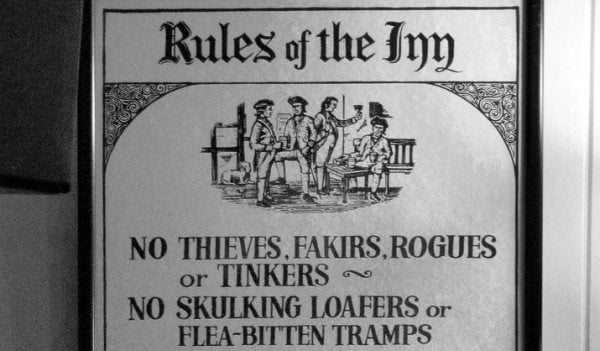
In this case, though, you have a group of entrepreneurs sitting around sweating over their burn rates, eager to build a new multi-billion dollar industry… an industry that is literally designed around helping enterprising Americans create businesses. Businesses hire people. I hear we could use a few jobs.
I’m beginning to wonder if all of the time spent after the deadline set by Congress for implementation of the JOBS Act is time well spent. Law is maleable. Regulations can be drawn up after the crowd finds cases of fraud. There is no real-world indication that the crowd lets fraudulent activity linger on until individuals are fleeced of actual money.
So, what comes first?
Featured image courtesy marktee on Flickr | Secondary image courtesy djbrady on Flickr