

A group of Republican Senators has submitted a discussion draft for digital asset market structure legislation. This follows the signing into law of the GENIUS Act, stablecoin legislation, and the approval in the House of Representatives of the CLARITY Act, a similar market structure legislation. The draft is said to “build upon” the House version of crypto market infrastructure legisltion.
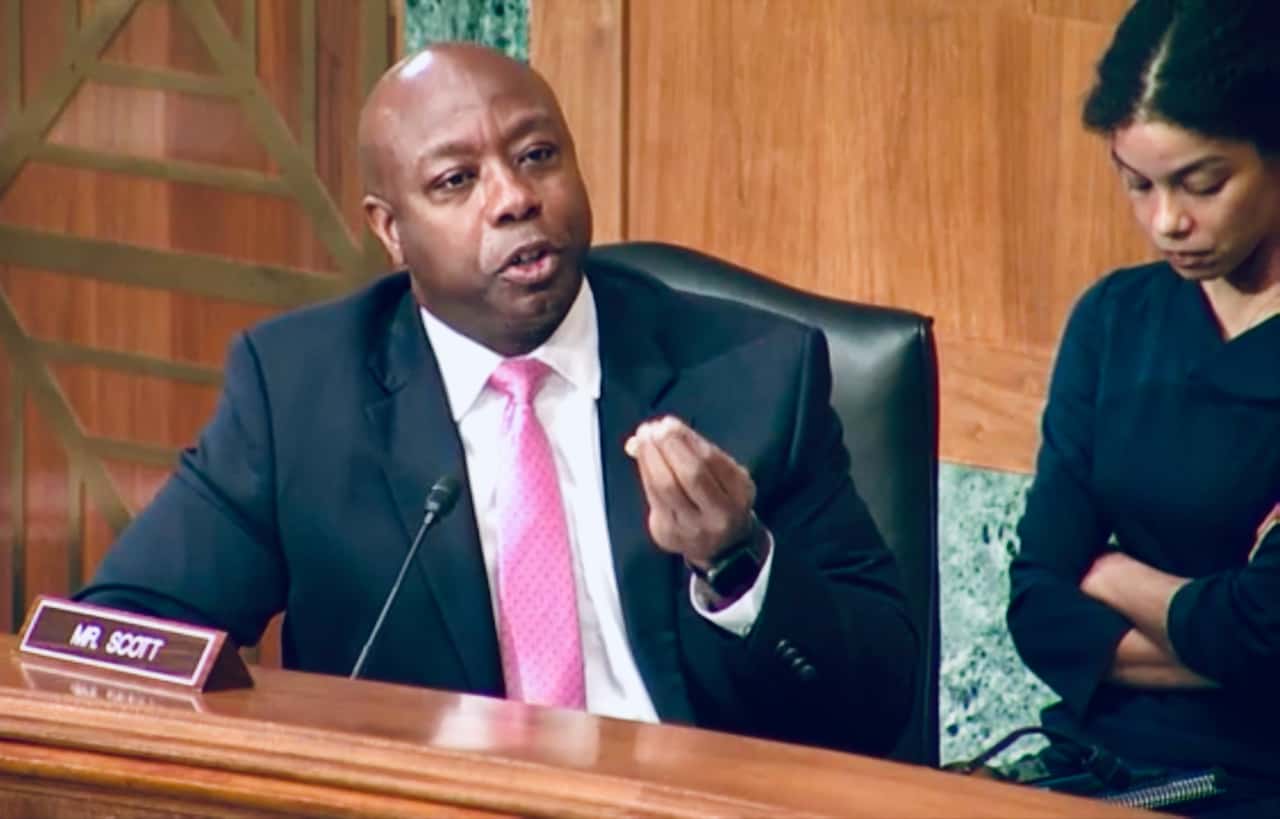
Senators Tim Scott, Cynthia Lummis, Bernie Moreno, and Tim Hagerty have joined in advancing a bright-line rule for the fast-emerging digital asset sector. Senator Scott is the Chairman of the Senate Banking Committee.
This includes guidance on which agency has regulatory oversight and how the various types of digital assets should be regulated. These four Senators have long been supportive of the digital asset industry and Fintech innovation in general.
Senator Lummis said, “We cannot allow regulatory confusion to continue driving American innovation overseas.
“Market structure legislation will establish clear distinctions between digital asset securities and commodities, modernize our regulatory framework, and position the United States as the global leader in digital asset innovation.”
“For too long, outdated laws and regulatory uncertainty around digital asset market structure have hindered American innovation and left consumers without adequate protections,” said Senator Hagerty.
The Senators are asking for the public to comment on the draft, highlighting specific areas, including;
- Regulatory Clarity and Tailoring
- Investor Protection
- Trading Venues and Market Infrastructure
- Custody
- Illicit Finance
- Banking
- Innovation
- Preemption
Kraken’s Global Head of Government Relations & Policy, Jonathan Jachym, has shared his thoughts on the draft bill. Kraken has been engaged with the White House and other policymakers from the beginning to create updated rules and foster digital asset innovation.
Jachym says the draft bill builds upon the current momentum in the House as Congress seeks to establish regulatory clarity and support innovation in the US.
“… this framework has the potential to provide clear, actionable guidance for the digital asset industry, while preserving the space needed for continued innovation. Kraken looks forward to reviewing the text in further detail and providing feedback to the Senate Banking Committee to ensure the final product promotes a thriving digital asset ecosystem in the United States”
Kraken is closely tracking how this progresses. Feel free to use his commentary in your coverage.”
The key differences between the two bills, according to Grok, are:
Summary of Key Differences
• Scope: The RFIA regulates all digital assets (ancillary assets, commodities, stablecoins) across securities, banking, and illicit finance, while the CLARITY Act focuses on digital commodity market infrastructure and permitted payment stablecoins.
• Definitions: The RFIA uses “ancillary asset” for securities exemptions, while the CLARITY Act defines “digital commodity” with blockchain linkage and references the GENIUS Act for stablecoins.
• Regulatory Oversight: The RFIA involves multiple regulators (SEC, CFTC, Treasury, banking agencies), while the CLARITY Act centers CFTC oversight for digital commodity markets with SEC collaboration.
• Securities Exemptions: The RFIA exempts ancillary assets broadly, while the CLARITY Act exempts digital commodities with specific blockchain and disclosure criteria.
• Market Infrastructure: The CLARITY Act provides detailed regulations for digital commodity exchanges, brokers, and custodians, while the RFIA focuses on broader digital asset activities.
• Stablecoins: The CLARITY Act integrates GENIUS Act stablecoin definitions and exemptions, while the RFIA minimally addresses stablecoins.
• Illicit Finance: The RFIA has comprehensive illicit finance measures, while the CLARITY Act tailors AML to digital commodity entities with a study.
• Innovation: Both support innovation, but the RFIA emphasizes sandboxes and international cooperation, while the CLARITY Act focuses on CFTC-led hubs and studies.
Conclusion
The RFIA is a comprehensive bill addressing the entire digital asset ecosystem, aiming to balance innovation, investor protection, and illicit finance prevention across securities, banking, and stablecoin sectors. The CLARITY Act is a targeted market infrastructure bill, focusing on regulating digital commodity markets (exchanges, brokers, dealers) and integrating stablecoin regulation via the GENIUS Act, with strong CFTC oversight and securities exemptions for digital commodities. The RFIA’s broader scope contrasts with the CLARITY Act’s focus on market structure and digital commodities, reflecting different legislative priorities.
If a bill is approved in the Senate, the House and Senate will meet to reconcile any differences before it is sent to the President to be signed into law.
To participate in the Request for Information (RFI), please submit your feedback to MarketStructure_RFI@banking.senate.gov.

