


California is considering a “wealth tax,” a concept that has failed everywhere it has ever been attempted.
California is one of the world’s top economies, competing with Germany and Japan with a GDP of around $4 trillion – far more than almost all other countries.
California’s innovation-driven economy fuels this dramatic wealth and prosperity, as many big tech firms, including Apple, Google, and Meta, call the state home.
California is also a high-tax state, as it adds 13.3% income tax on higher-income residents. Capital gains taxes at the state level are paid the same way as personal income taxes. It does not stop there, as its state sales tax stands at 7.25%. Add in local sales taxes, and this number can rise to 11.25% in some areas.
In the US, California ranks 48th worst for taxes, narrowly topping New Jersey and New York.
What California does have is incredible weather and a beautiful, dramatic landscape from the mountains to the ocean. It is also home to the world’s most favorable location for accessing risk capital.
But this dynamic ecosystem is at risk because, in recent years, a growing number of firms and individuals have fled the state due to high taxes and the state’s profound political incompetence to more welcoming states like Florida, Texas, and Tennessee. The recent proposal for a wealth tax will only exacerbate this trend, something its proponents appear unable to comprehend.
Over the weekend, venture capitalist and innovation proponent Chamath Palihapitiya hammered the concept of a one-time 5% tax on all assets for billionaires, arguing it will “kill entrepreneurship in California.” In effect, decapitate the golden goose that created one of the world’s most significant economies. In a post on X, Palihapitiya explained how absolutely preposterous the wealth tax is.
In brief, taxing unrealized gains makes no sense whatsoever. Most “wealthy” individuals in the startup ecosystem hold shares in illiquid firms, whose valuations are driven by funding rounds. These valuations can go up. But they can also go down.
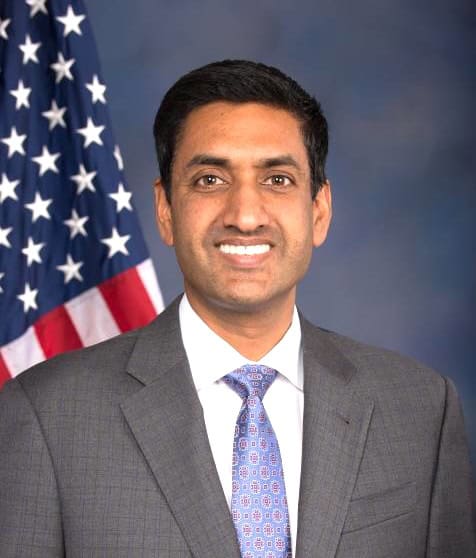 Congressman Ro Khanna, the representative for Silicon Valley, took to X to throw shade at those who pay much of the hefty California tax bill. He sarcastically said he did not care if innovators and wealth creators left the state of California.
“Peter Thiel is leaving California if we pass a 1% tax on billionaires for 5 years to pay for healthcare for the working class facing steep Medicaid cuts. I echo what FDR said with sarcasm of economic royalists when they threatened to leave, “I will miss them very much.”
Other members of the venture – Fintech sector joined to condemn the obtuse proposal.
Venture Capitalist Nick Davidov agreed with Palihapitiya’s explanation.
“It’s not a billionaire tax, it’s an anti-unicorn law. All 9 founders of our portfolio companies that have become “paper billionaires” recently but still live on a middle-class income won’t be able to afford this tax. This would force a fire sale (and then another one to pay the tax on the fire sale) and effectively hinder their ability to fundraise and compete internationally. I guess I’ll just help them carry their bags to the airport…”
European entrepreneur @hagaetc, Co-founder & CEO of Dune, explained that many European countries have recognized the harm caused by taxing unrealized gains and abandoned it. He shared his personal experience in Norway with a wealth tax on unrealized gains:
“As a startup founder in Norway, I was facing an unrealized gains tax bill many times higher than my net income. No politician ever told me how I’m supposed to pay the bill, but I got put up on the Socialist Left party’s “Wall of Shame” for speaking up.”
Because he could not pay the bill and because of the challenging VC environment, he moved to Switzerland to avoid the punitive policy. Others have done the same. He added:
“…Reminder to California: Taxes on unrealized capital gains have led to more than half of the wealth held by Norway’s top 400 taxpayers moving abroad. i.e., Norway has become more equal and made everybody poorer and worse off, just as expected from strong socialist ideas.”
On X, @BlackApple outlined the firms that have already fled the state of California.
List of major companies fleeing California, taking well over $1.3 trillion of revenue with them. Great job Newsom!
• AECOM
• Align Technology, Inc.
• Amazing Magnets, LLC
• Amgen Inc.
• Anduril
• Anheuser-Busch
• Bed Bath & Beyond
• Blaze Pizza
• Blue Diamond…— BlackApple (@BlackApple) December 28, 2025
Once gone, it is difficult to get these firms back, and by impeding new startups to take their place, Congressman Khanna seems to want the California innovation ecosystem to experience a quick death.
Entrepreneur Palmer Luckey noted that under the proposal, a single market correction could leave him homeless and in debt, owing billions he cannot pay.
Former Thiel Fellow Dylan Field shared that Peter Thiel is probably directly responsible for hundreds of thousands of jobs in California. He wonders why any politician would “so quickly and flippantly say goodbye to this type of job creation and tax revenue for California?”
AngelList founder Naval Ravikant said the proposal has already harmed California:
“Congratulations, by threatening taxes on illiquid paper markups, you’ve halted AI fundraising for 2026.”
Yikes!
Don’t Let the Facts Get in the Way of a New Tax
Of course, more competitive and effective states are ready to welcome the tax refugees from California.
Top Republican Governor Ron DeSantis did not mince his words:
“Taxing unrealized gains at 5% will obviously backfire. So, of course, California will probably go through with it…”
While nobody in their right mind would support a wealth tax, the electorate continues to vote for individuals who are either incompetent or, worse, socialists who want to kill the innovation-driven economy and replace it with shared poverty.
In the US, while some individuals become fantastically wealthy, this needs to be viewed as a good thing, as it improves the economic environment for all. They create wealth because the market values the products and services they build, which benefits all of society. And these same individuals do not hide their money under their mattresses as some politicians believe. They put it to work investing the funds or backing risky early-stage firms, which fuels jobs, experience, and prosperity.
In the end, you get the government (and policies) you elect.
If you take one look at the European method, which values public services over innovation and prosperity, you can see where things are going wrong. You may feel good in the short run, but eventually, time runs out, and there are bills to pay and fewer people able to pay them.
It seems California wants to rush to this inevitability as the wealthy vote with their feet and move away, and the state suffers because of it, bringing everyone down.
The ongoing decline of Europe, in one chart. pic.twitter.com/LQ2tg8kavO
— Andrew Neil (@afneil) December 26, 2025

