

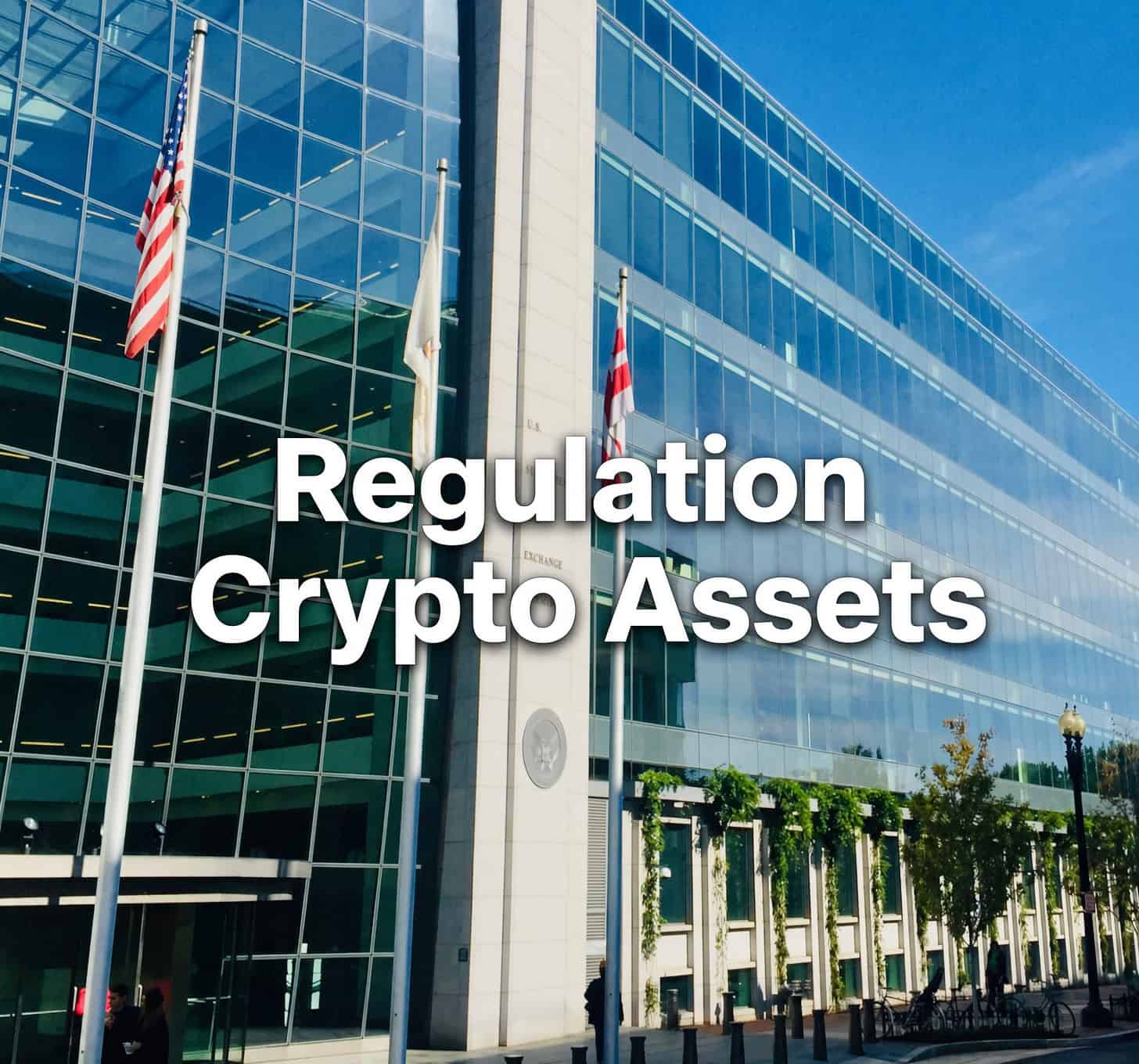
The Securities and Exchange Commission (SEC) delivered a bit of a surprise today by proposing new rules for crypto offerings. Regulation Crypto Assets would clarify how securities laws apply to certain digital asset offerings, preempt state authority, and support secondary trading. The Commission had scheduled a meeting for August 14th to discuss Regulation Crypto Assets, then canceled it. Today’s announcement came without the Commission’s typical open meeting to discuss the rules.
The proposed rules include two exemptions from the registration requirements.
The first is a one-time exemption that would permit offerings of up to $5 million during a four-year period.
The second exemption would permit offerings of up to $75 million during each 12-month period.
For both exemptions, an issuer would be required to make principles-based disclosures. For the second exemption, which has the $75 million funding cap, issuers would need to file financial statements alongside ongoing reporting.
These exemptions align with the current Reg CF and Reg A+ exemptions created under the JOBS Act of 2012, during the Obama Administration. These two exemptions support online capital formation, alongside Reg D 506c.
The “startup exemption” would be a one-time, non-exclusive exemption from Securities Act registration requirements allowing a funding round of covered investment contracts of up to $5 million.
The Fundraising Exemption would include two tiers, similar to Reg A.
Under Tier 1, issuers could offer up to $20 million of covered investment contracts in a 12-month period. Under Tier 2, issuers could offer up to $75 million of covered investment contracts in a 12-month period but would need to file offering documents, along with audited financial statements and periodic reporting.
A key aspect of Reg CA is that states would be preempted from applying state securities laws and qualification requirements. This would also apply to secondary transactions.
The proposed rules would define “qualified purchaser,” under which state securities law registration and qualification requirements would be preempted for offers and sales of covered investment contracts. This would also include secondary transactions.
States have continued to voice concerns about diminished authority. In fact, the states sued the SEC over Reg A+, eventually losing in court. At the same time, states can still pursue fraud.
The SEC said these “efforts introduce a comprehensive, tailored securities offering regime intended to address long-standing barriers to responsible capital formation and innovation within domestic crypto asset markets, while preserving the investor protections at the core of federal securities laws.”
SEC Chairman Paul Atkins said the agency is providing clarity for crypto markets while Congress pursues a “lasting regulatory framework.” Currently, the CLARITY Act, the crypto market legislation, is being held up in the Senate largely because of the politics swirling around the issue. Many Senate Democrats do not want to give the White House, nor Republicans, a win in an important midterm election cycle. But while politics fester, the bill would protect consumers and businesses while enabling vital innovation. If the bill becomes law, the US will quickly be in a leadership position globally to help guide the emerging ecosystem.
“In line with the Commission’s earlier interpretative guidance, this proposal would also allow for a safe harbor once an issuer has completed or permanently ceased all essential managerial efforts that it represented or promised it would take under an investment contract,” stated Atkins. “Congress designed our securities laws to amplify – within specific guardrails – opportunities for entrepreneurs to innovate and build new products. Advancing this regulatory framework is a key element in our strategy to advance the rule books for the modern era and another step by the Commission to onshore innovation in crypto asset markets for generations to come.”
Chair Atkins said on YouTube that when he took office as head of the Commission, he pledged to ensure the US remains the leader in digital asset innovation while lamenting the approach of the previous administration, which left the sector in rulemaking purgatory.
Commissioners Hester Peirce and Mark Uyeda, both Republicans, issued separate statements on Regulation Crypto Assets.
Commissioner Uyeda said it was regrettable how the securities regulator has treated crypto in the past.
“Even when a crypto asset was properly treated as a security, prospective issuers were provided no realistic way to comply with the Commission’s registration process. Persons who sought to register their crypto offerings were often given a bureaucratic runaround with no resolution in sight. Those who tried to engage with the Commission in good faith found themselves facing subpoenas and litigation rather than answers. This approach left market participants asking why they should even try to comply with SEC rules, when they could move their operations offshore. Regulation Crypto Assets would replace the guesswork with fixed thresholds, defined disclosure obligations, and a set of conditions that issuers can measure themselves against before they make their offering—not after they are told they “got it wrong” in hindsight.”
Uyeda welcomed the “workable path to raise capital” that provides more opportunities to investors, keeps innovation stateside and supports consistent protections.
Commissioner Peirce added that the “Commission wants to accommodate innovation on many fronts, and our rules need to be tailored to changing market developments and designed to protect investors and market integrity.”
She described the proposal as one step on the long road to a “clear, sensible, enforceable regulatory framework for crypto.”
A public comment period will remain open for 60 days after the proposal is published in the Federal Register.
Current participants in the securities crowdfunding sector, including broker-dealers and funding portals, may be expected to move quickly into this segment of capital formation, leveraging existing technology while competing with established crypto-first platforms and modern broker-dealers.
Regulation Crypto Assets Fact Sheet is below, and the proposed rule is viewable here.

