


Texas is one of the states growing rapidly, experiencing population migration as firms seek business-friendly jurisdictions. Texas is one of a handful of states without a state income tax. A recent ranking of states by overall tax burden ranked Texas 1st in the US for individual taxation. In comparison, New York was ranked dead last for individual taxes, followed by California.
IRS data shows that Texas was one of the 27 states experiencing an increase in interstate migration. In fact, between 2022 and 2023, Texas generated the most inbound migration of any state.
On the other end of the spectrum, California and New York were, once again, in last place.
Last month, the Texas Stock Exchange (TXSE) commenced trading in a milestone event for Texas. The TXSE was approved by the SEC as a national exchange in 2025, with backing from major financial services firms like Goldman Sachs, Citadel, Charles Schwab, JP Morgan, and others. Public company listings and IPOs are planned to ramp up through the rest of the year and into 2027. Charles Schwab made a bigger move, exiting San Francisco to establish its corporate headquarters in the region.
Y’ALL Street
The Dallas-Fort Worth region has seen major investments in financial services, as Goldman Sachs pursues a major campus targeting 5,000 employees, and JP Morgan is now basing more employees there than at its corporate home in New York City.
Recently, CI connected with Gloria Salinas, SVP and Chief Growth Officer of the Frisco Economic Development Corporation, located in the Dallas-Fort Worth region. Frisco is recognized as one of its fastest-growing business hubs with more than 300 financial companies now operating in the city. Frisco claims to be one of the nation’s deepest finance talent pools in the country.
Below is our discussion of Texas’s rapid growth and boom in financial services.
There has been much discussion about migration away from traditional capital market centers to more business-friendly regions. What are you seeing on the ground in the Dallas area?
Gloria Salinas: We’re seeing a fundamental shift in where financial services companies want to grow. North Texas has become one of the country’s leading destinations for corporate investment, but Frisco stands out because it offers the combination companies are looking for: talent, infrastructure and room to scale. The latter includes 15 million square feet of office space coming online in the next 15 years.
More than 300 financial companies operate in the region today, and employers can access more than 250,000 business and financial professionals within a 30-minute commute of Frisco. This isn’t simply a relocation story. Firms are building for the future in markets that can support long-term growth.
The launch of TXSE is emblematic of a possible transition for both TradFi and digital finance to move away from NYC, Chicago, and perhaps the Bay Area. The headlines have reported that JPM has more employees in Texas than in NYC, and Goldman has a large presence as well. What are your predictions for the next few years?
Gloria Salinas: From my perspective, financial services will not be limited to a single city, and North Texas is well-positioned to help define its future. TXSE is the latest signal of the talent, investment, and innovation that’s been building in the region for years. Frisco is at the center of much of that momentum, given its meteoric growth, position as the region’s “Tech Talent Corridor,” and its expanding corporate ecosystem.
Over the next several years, I expect we’ll see more firms establish headquarters and corporate innovation center operations here across financial services, fintech, cybersecurity, and adjacent industries, rather than treating Texas simply as a satellite office location.
Is this mostly about taxes? Is it about good governance? Dallas and the surrounding region are also home to multiple universities. How important is talent?
Gloria Salinas: Taxes matter, but they’re rarely the deciding factor. Talent is. Companies ultimately follow people, and Frisco offers access to one of the nation’s deepest pools of financial and business talent, alongside a growing pipeline from North Texas universities, including UNT-Frisco’s innovation campus.
Pair that with a business-friendly environment, strategic infrastructure investments and an exceptional quality of life, and you have the ingredients for sustainable growth. Firms aren’t just choosing where to do business; they’re choosing where their employees want to live and build careers.
Florida and Tennessee are also frequently named as gaining from this transition. Are these states your big competitors? What is the Texas advantage?
Gloria Salinas: There’s certainly competition among high-growth states, but Texas offers a unique combination of scale and diversity across industries. In Frisco, financial services growth intersects with technology, advanced industries, sports innovation, and real estate, and it is creating opportunities for collaboration that few markets can replicate.
Companies don’t have to choose between access to talent, corporate partners, or growth opportunities, as they can find all three here. That’s been a major differentiator for Frisco’s continued momentum.
What about Fintechs? Are you engaging with more early-stage, private firms? Which sectors? Digital assets? Payments? Online capital formation? Banking?
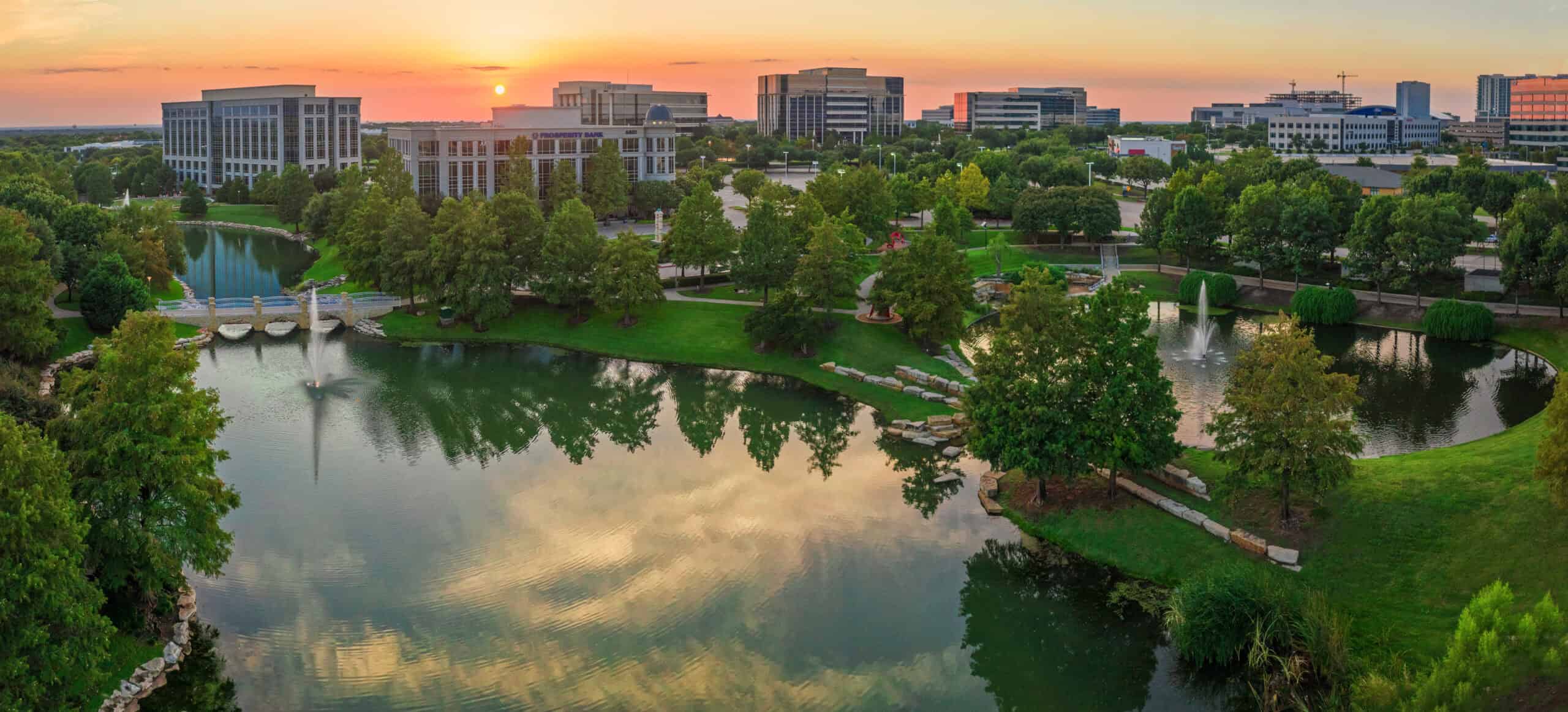 Gloria Salinas: We’re seeing significant activity across Fintech broadly, particularly in payments, financial technology platforms and banking-related services. Frisco has attracted companies ranging from established financial institutions like TIAA to high-growth innovators like SoFi and Payrix, which was acquired by Fidelity for nearly $777 million in 2021.
As financial services continues to evolve, we’re finding that early-stage and growth-stage companies increasingly want to be part of ecosystems where they can access both customers and talent. Frisco’s position within North Texas makes it particularly attractive for firms operating at the intersection of finance and technology.
Over the next few years, will this migration affect NYC? It seems that current leadership in the city and the state is doubling down on policies that undermine economic growth and job creation. What are your thoughts on this?
Gloria Salinas: New York will remain one of the world’s great financial centers; I don’t think Wall Street can simply vanish. What’s changing is that companies today have more choices than ever before. They’re evaluating where they can best compete, attract talent, support innovation and create long-term value.
Markets like Frisco have benefited because we’ve remained focused on fostering an environment that supports business growth while investing in the infrastructure and talent companies need to succeed.
The future of financial services isn’t likely to belong to one city; it will be shaped by multiple world-class hubs, and Frisco intends to be one of them.