

How does Artemis protect companies from faster and more powerful AI-based attacks? By using AI to help companies leverage what they know better than the attacker – how their business runs at its core.
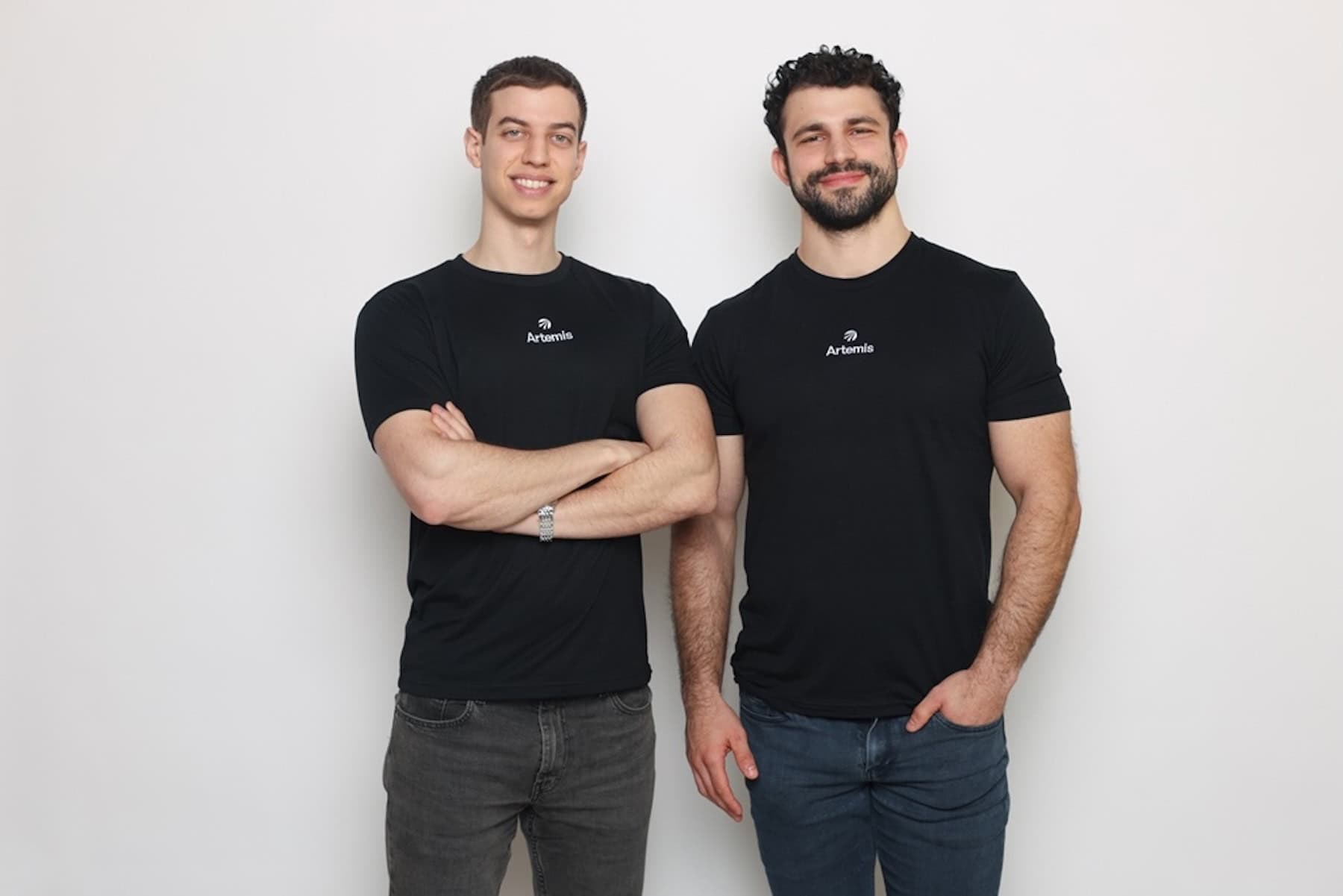
It also helps to have two extremely qualified co-founders. Shachar Hirshberg spent five years as an intelligence officer in the Israel Defense Forces. He moved on to cyber security software development at IBM and Demisto before the latter was acquired by Palo Alto Networks. Hirshberg then spent three years as Amazon Web Service Guard Duty product leader.
Co-founder and CTO Dan Shiebler designed patented sensor data analytics algorithms in support of TrueMotion’s $650 million-plus acquisition. He built and managed Twitter’s web ads machine learning organization. With Abnormal AI, Shiebler oversaw detection efficacy and AI and machine learning initiatives.
Hirshberg said companies are quickly becoming aware of how AI is changing cybersecurity. In short, they’re much faster and more sophisticated. That’s good, because in, at most, five years, cybersecurity will be a fully automated digital war zone where a company’s best defense is technology that truly understand their unique operating environment.
Three tipping points: When business started taking AI cybersecurity seriously
Was there a tipping point that alerted businesses to AI’s cybersecurity risks? Hirshberg identified three.
In 2025, Anthropic released a report on how it sees adversaries using its technology. Thousands of concurrent attacks can be simultaneously released at machine speed. This March, CrowdStrike analyzed the environment and found systems could be compromised in less than an hour as opposed to days. Weeks later, Anthropic’s Mythos showed it could identify significant system vulnerabilities.
How are AI-assisted attacks different?
How are AI-assisted attacks different? Hirshberg said AI helps criminals create detailed operational maps of their targets. Instead of attacking one spot, they can hit all areas at once. When humans led attacks, they had to reason through the information they received before proceeding through the next steps at human speed. Now, with AI reasoning, criminals can design targeted attacks in seconds.
“Because the cost to perform a sophisticated attack will go down, I will say the floor has been rising in terms of the quality of the attack,” Hirshberg said. “Smaller companies will also most likely be attacked in a sophisticated way, much more frequently.”
Legacy security systems are not designed for such attacks. Hirshberg said they are built for static protections on predefined scenarios. AI-savvy criminals will attack this by blending their attack into a business’s normal operating procedures.
How Artemis fights back
Those procedures are how Artemis fights back. Artemis seeks to better understand the business by analyzing finances, communications, and other data to separate legitimate concerns from the noise. With each company having its own unique risk profile, Artemis maps out a detailed, automated assessment for each one, helping it detect when serious threats arise.
Imagine a company receives a digital shipping document. Is it legitimate? Many static systems run through a boilerplate response list to determine if it’s a threat. Artemis accesses communications, financial records and historical data to see what recent activity has recently occurred with that company.
“That level of detail, the act of understanding who you are, what you bought, and when it’s supposed to arrive is something we do at Artemis, but something which, traditionally, is far away,” Hirshberg said. “Attackers learn your business from the outside, try to blend in. From a defender’s point of view, the biggest advantage you have is that you know your business better than everyone else.
“As we think about the age of AI, I think we’ll see organizations lean more into their competitive advantage and that is understanding your activity… and having intelligent systems such as Artemis to detect when things go wrong.”
Despite being less than one year old, Artemis is looking far into the future. Hirshberg said AI will only grow more powerful. For small companies, that means harnessing the power of automation so they can protect their systems around the clock. For companies of all sizes, it means designing architecture so it’s always accessible to AI agents that reason over data. As reasoning agents become more powerful, so does Artemis’ protection.
“The art and science of making the right data accessible in the right way to agents is where a lot of our activity lies,” Hirshberg said.