


The crypto industry is in transition.
The relatively young space that is built on an exciting, new technology platform called blockchain, or decentralized ledger technology (DLT), has enjoyed the attention of invigorated developers and investors. These players are working to define the future of the industry, and one key underlying concept, the token, is a point of focus.
Until just recently the Utility Token and ICOs (Initial Coin Offerings) were the talk of the industry. Utility Tokens comprised the lion’s share of the nearly $7 billion raised in the last 15 months, but it is very likely the industry will see some changes as a direct result of what many might say are the rather confusing positions of various government and regulatory bodies.
On the one hand, it seems as if the SEC has determined that the distinction of a “utility token” has been meaningless in practice and that substantially all past token offerings have been securities subject to securities regulation.
 In contrast, a recent bill passed in Wyoming, House Bill 70, seeks to provide clear exemptions from specified securities and money transmission laws to persons who develop, sell, or facilitate the exchange of “utility tokens,” which are referred to in Wyoming House Bill 70 as “open blockchain tokens.”
A developer or seller of an “open blockchain token” would not be considered the issuer of a security if (i) the token has not been marketed as an investment; (ii) the token “is exchangeable for goods or services;” and (iii) the developer or seller has not entered into a repurchase agreement or an agreement to locate buyers for the token.
Behind the confusing messages and general crowdfunding fervor, some issuers began developing and marketing the “security token.” The concept embraces the idea of a “tokenized” security with the goal of improving on how fractional ownership is managed.
The hope is that security tokens that are regulated as “securities” will help quell confusion.
Buyers of security tokens understand what they receive (a security, defined by the SEC) in exchange for their investment. A security token might be a new token issued as equity ownership in a startup (whether it is a blockchain-based company or not) or an asset-backed security token that represents some valuable real-world asset like an amount of gold or land ownership.
As this industry innovates, and security tokens get better engineering and regulatory guidance, they will diverge in form and function from their “utility token” siblings.
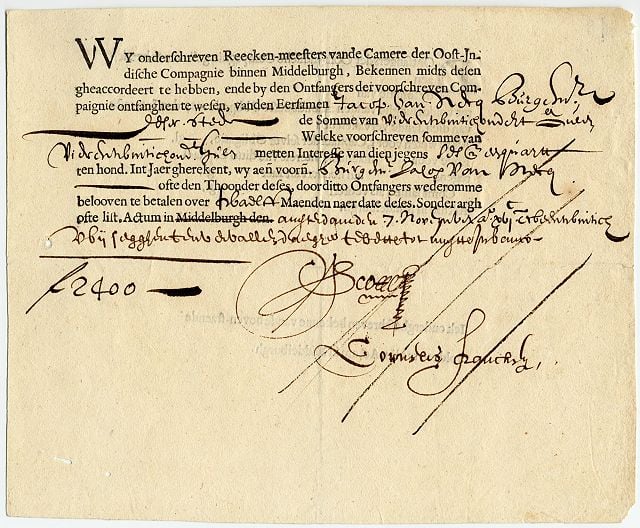 If the industry wants to more easily represent the difference between these utility tokens and security tokens, it is probably best to use better nomenclature. We propose a shift to “Digitized Securities” rather than “Security Tokens”.
The name “Digitized Securities” distinguishes it from utility tokens and signals to entrepreneurs and investors that the focus of the new asset is on delivering the benefits of blockchain technology to the investors who purchase them and the entrepreneurs building companies around them through a regulated regime.
Securities that are digitized have the potential for significant advantages over non-digitized traditional securities (such as the fact that they are created on the blockchain and maintain on the decentralized ledger), and with time will come more and more advantages as the technology advances.
Digitized Securities offer the potential for greater inclusivity and deeper market penetration (by generally providing for lower investment minimums and in an offering designed for a broader audience in compliance with applicable law).
[clickToTweet tweet=”Digitized Securities offer the potential for greater inclusivity and deeper market penetration #Blockchain” quote=”Digitized Securities offer the potential for greater inclusivity and deeper market penetration #Blockchain”]
As the market matures, the offering of Digitized Securities will likely become more automated which as the capacity to streamline management of cap tables and distribution of proceeds, and the security token exchanges that are being developed should provide a market for liquidity for the tokens.
Overall, it is expected that offering Digital Securities through offerings in compliance with securities laws (but not through an “IPO”) will lower the cost for raising capital (by, for example, eliminating the costs of underwriters) and provide liquidity on a secondary market compared to traditional capital markets alternatives if the security token exchanges are developed.
[clickToTweet tweet=”offering Digital Securities through offerings in compliance with securities laws will lower the cost for raising capital & provide liquidity on a secondary market compared to traditional capital markets if the security token exchanges are developed” quote=”offering Digital Securities through offerings in compliance with securities laws will lower the cost for raising capital & provide liquidity on a secondary market compared to traditional capital markets if the security token exchanges are developed”]
Ensuring that investors stay informed and that issuers of digitized securities abide by all existing securities regulations is of great significance. Renaming “Security Tokens” is a natural and positive step towards realizing the potential of Digitized Securities – a potential that warrants a clear distinction of why they are unique in the marketplace, without confusing investors.
 Carlos Domingo is an entrepreneur, investor and co-founder and CEO of Securitize Inc. Prior to Securitize, Carlos co-founded SPiCE VC, the first liquid, inclusive and transparent tokenized VC fund on the blockchain. Previously, he was the President and CEO of Telefonica R&D and CEO of New Business and Innovation at Telefonica Digital. He also co-founded and sits on the board of Wayra, one of the world’s largest corporate accelerators. A self-described crypto-capitalist, he is the founder of Sling Ventures, an angel-investment fund co-invested by the European Invested Bank; a founder of Dubai Angel Investors; and a venture partner in THCAP VC. Carlos has also been a CTO, CEO and board member for multiple tech startups.

