

While the US financial markets are the deepest and most efficient in the world, there is always room for improvement. Public markets have been in decline for many years. Meanwhile, private markets have grown dramatically, which is good for many, but too often, retail investors are blocked from the market while private firms aim to remain private for as long as possible.
One way public markets could be improved to encourage more firms to trade shares on exchanges is by reducing the bloated, ridiculous over-regulation that makes the cost of becoming a reporting firm prohibitive for all but the largest firms. Frequently, rules are created by elected officials that target political goals while undermining the markets that should be supported.
These high costs are passed on to investors and consumers, as a public company must pay them, and the money must come from somewhere. In effect, it is a hidden tax on the economy as funds are not invested but paid to the federal government to cover mandated disclosure.
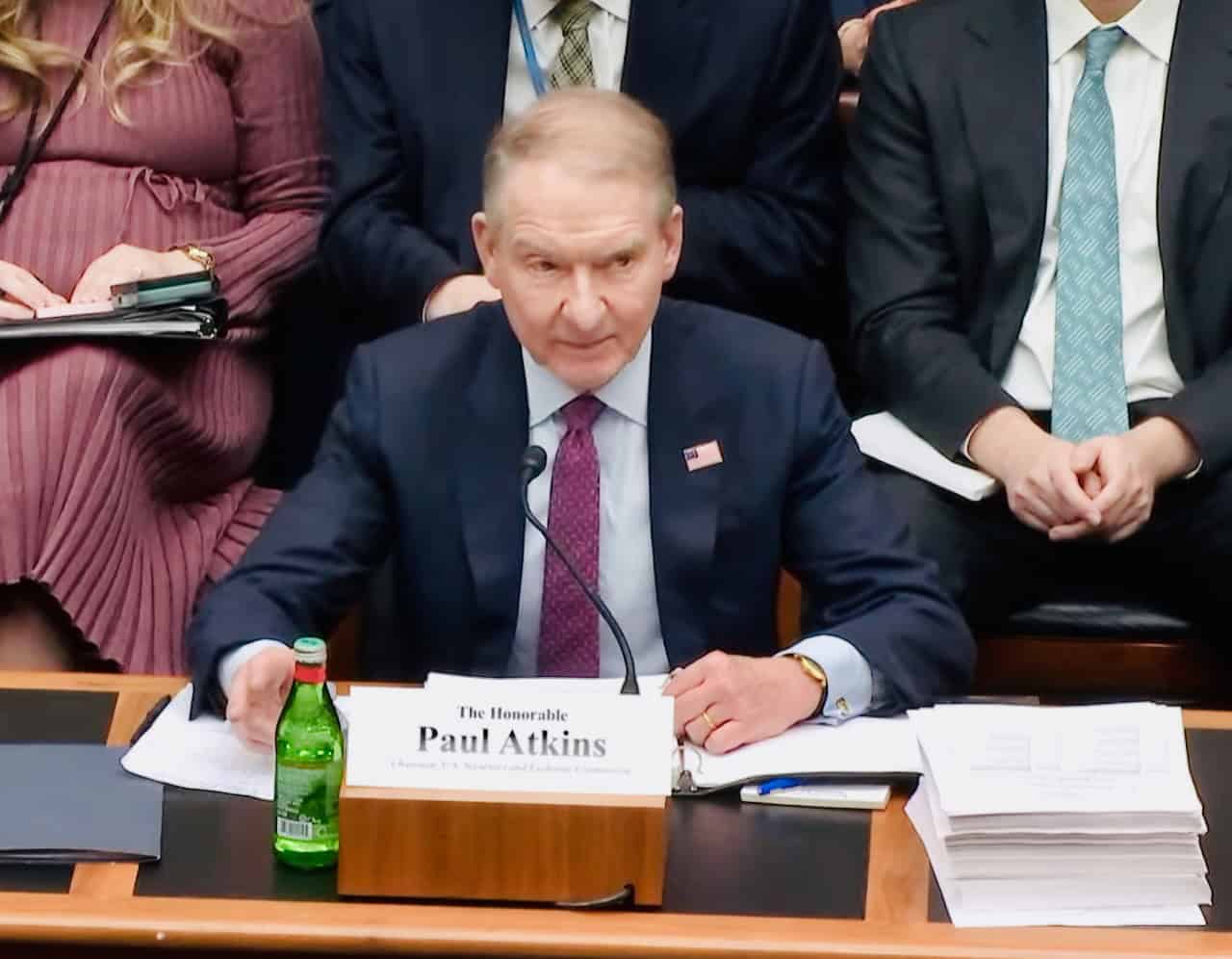
In his prepared remarks delivered today to the House Financial Services Committee, SEC Chairman Paul Atkins addressed this issue, noting that about $2.7 billion is paid each year for public firms to file their annual reports. As there are many other types of mandated disclosures, that number is surely quite a bit higher.
Meanwhile, much of the information in these reports is read by no one except the teams of attorneys who put them together and the teams of attorneys looking for transgressions and an opportunity to sue.
At the hearing, Chair Atkins sat next to a recent annual report that could be measured in pounds and numbered over 1000 pages.
Now Chair Atkins does NOT want to eliminate all or meaningful disclosure. He simply wants to focus on materiality – the information that is important for investors. In effect, Atkins wants to “Make IPOs Great Again” while addressing the massive “regulatory creep” that has caused the number of public firms to crater by 40% since the mid-1990s when he previously served at the SEC.
“… we must modernize, rationalize, and streamline reports so that they are meaningful, understandable, and not a repellent to investors. After all, how many of you would read through an annual filing that rivals War and Peace? Disclosure documents of that length can do more to obscure than to illuminate.”
While disclosure and materiality are not a sexy topic, except for the legions of lawyers who make a living from the inefficient process, they are important for markets, investors, and public firms. Kudos to the Chairman for seeking to correct this travesty of overregulation. This is something that should have taken place years ago.