
Continuing the search for the next PledgeMe board member, co-founder of the crowdfunding platform, Anna Guenther, unveiled some pretty good advice on how other businesses can attract more members to their business.
 PledgeMe started searching for a new board member after Anake Goodall stepped down from his position with the company. Guenther previously shared:
“With Anake leaving our board of directors, we’re on the lookout for someone to jump on the roof of the car that is PledgeMe. That someone needs to be able to shine their full beams on our mission to help Kiwis fund the things they care about, our strategy, and oversee our management team.
“We’re going to crowdsource applications because… you know… we’re a crowdfunding site. Typically, the hunt for a new board member goes on behind closed doors, but, we’ll be searching for the right person with our crowd’s help. Who is our crowd? Well that’s you!”
Although she’s still looking for the perfect candidate for the board, Anna is ready to offer tips for other companies. She stated:
“Having appointed (and tried to appoint) a few board members over the years, we’ve realised that finding good governance beyond your founding team is hard. Like capital raising — something we know a bit about — it’s often seen as a ‘nice to have’ not a necessary. So I thought it might be useful to document the process PledgeMe took finding our new board member, so other startups (and stay-ups) could see it’s not so hard and it is so necessary to set your companies strategy and manage your risk.”
Check out her steps to find a board member below.
Step 1: Decide if your business really needs a new board member. Seems simple. Anna noted that there was a positive response to the idea of getting some new blood on the team. She advised:
“You don’t always need a director though. Sometimes you just need advice from people who have been there, done that. If that’s the case, you could set up an advisory panel to soundboard ideas and gather information. The key difference is that these advisors do not make decisions for the company, and have no power or legal duty to the company.”

Step 2: Decide what skills are needed to make a great board member. Anna revealed that the company sought out various skills, including Legal, Finance, Marketing / Sales, Tech, HR, Regulatory, Product, Strategy & Communication. She commented:
“We did a round of (anonymously) rating each current board member 1–4 (4 being high) on these skills/experience and provided personalised feedback on what we each did well / didn’t do well.”
Step 3: Write up a role description. Anna stated that her team created a description that consisted of the following:
- What skills / experience we wanted the director to bring (mapped against the skills we already had).
- Note about the importance of diversity, but pro-tip: turns out just asking for women is illegal.
- The terms (eg. how long the role will be)
- How much we’d pay (we offered $1,100 a month with a mix of shares and cash, but we’ve seen everything from nothing to $2,000 per meeting)
- A bit on how our board currently operates, who’s the chair? How often we meet / how long for?
- Who is currently on our board? We broke out our trusty board bios and photos (of us looking semi professional, and us having fun)
- What is important to us around the board table (being constructive, asking questions, caring).
- The risks of being on the board / any board. Being a startup is risky, especially in the financial markets.
- The process — what are the next steps? When do applications close?
Step 4: Get a communication plan ready. Anna noted that her team did the following to get the word out about the new position:
Content:
 Content 1: Lead up blog about Anake leaving
Content 2: Blog about the role
Content 3: Blog about diversity and why it’s important to us
Social channels
- PledgeMe Facebook
- PledgeMe Twitter
- Newsletter
- Personal social media accounts (Anna, team, board)
- Appoint Better Boards
- Shoulder tapping individuals to share / apply.
- Talking about our process IRL to everyone we knew
Step 5: Find the right tools for the applications. Anna and her team used Weirdly and asked each applicants why they wanted to work for the company:
“We also had our applicants put in a photo. We were told through the process that this might make us biased, and in hindsight I totally agree. In the future we won’t ask for them based on this feedback. In saying that, some people totally rocked out the photos. We had colanders on heads, photos of people at our birthday parties, and pets).”
Step 6: Launch the position to the world. Anna went on to share how quickly the position received attention:
“We had our first application in 5 minutes! Over the three weeks we had the Weirdly application form open, 107 amazing people applied. Yes, you read that right. One hundred and seven applications!”

Step 7-12: Communicate, Shortlist, Phone Calls, Due Diligence, Interviews, and Background. The usual items needed for an interview.
Step 13: Decision Time. Anna noted that the most difficult step was none other than selecting the candidate:
“We had such amazing people apply for our role. The board and staff wished we could have all of them. None of them made our job easy, and that’s a testament to the amazing breadth of skills and experience in New Zealand, as well as the willingness to roll your sleeves up and help a company going from starting up to staying up.”
Step 14: Resolution Time. Anna and her team needed to pass an ordinary resolution to appoint the new director. She commented:
“Our directors are all shareholders of PledgeMe, and between us hold more than 50% of the company. That said, we still want to go out to our shareholders first — so we plan to go to our shareholders before we pass the resolution, to get their questions before we make the final appointment.”
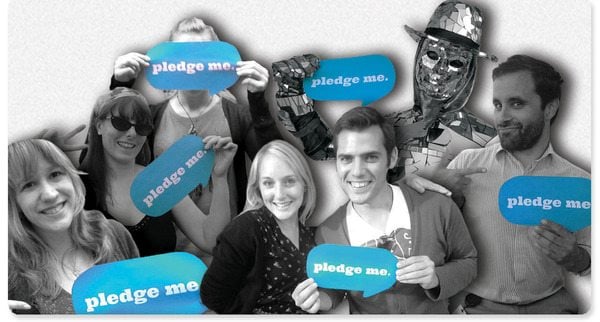
Step 15: Share the news! Anna and her team are currently on this stage.
Anna went on to add that the new board member will be announced very shortly.